


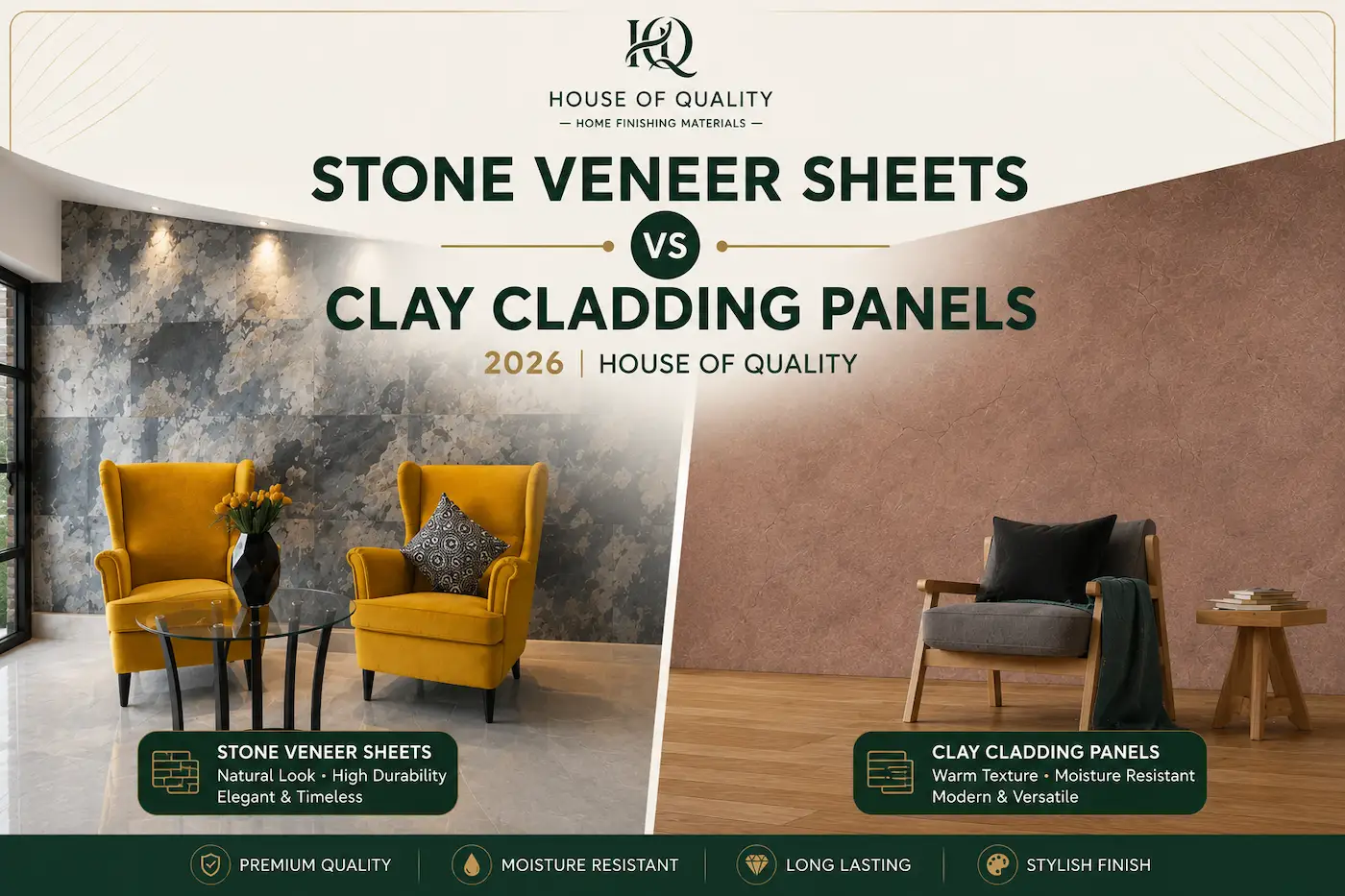
Homeowners and villa developers across Saudi Arabia repeatedly face the same decision when planning a facade or garden renovation: stone veneer sheets vs clay cladding panels — which one actually delivers the best mix of look, durability, and value? Unlike most guides that simply list features, this comparison from Bait Al Jawdah walks you through how each material performs in real installations, plus where natural stone gravel fits into the picture for landscaping.
What Are Stone Veneer Sheets?
Stone veneer sheets are a thin layer of real natural stone bonded onto a fiberglass backing, giving walls an authentic stone look at a fraction of the weight and cost of solid stone or cladding. They can be installed on almost any flat surface — plaster, old paint, or even existing stone — using exterior-grade adhesive outdoors or silicone indoors. Explore the Stone Veneer collection for popular finishes used on Saudi villa facades.
What Are Clay Cladding Panels?
Clay cladding panels are engineered from a blend of clay, sand, and natural stone powder, offering strong resistance to heat, humidity, and fire while staying lightweight and easy to install. Compared to stone veneer, clay panels generally offer a wider variety of finishes — from travertine to cut-stone textures — at a more accessible price point. Check the Cut Stone Clay Sheets model for a modern, natural-stone finish.
Where Natural Stone Gravel Fits In
Natural stone gravel isn’t a wall-cladding substitute — it’s a complementary landscaping material used for garden beds, walkways, and driveways to reduce weed growth and improve drainage. Available in white, black, and honey tones, it’s an easy way to visually tie an outdoor space to a stone or clay facade. See the Natural Stone Gravel options to match your garden design.
How Competitors Frame This Comparison
Most international guides on stone veneer vs. cladding materials — from cladding associations to specialty stone retailers — converge on a few consistent points: manufactured veneer wins on installation speed and upfront cost, while natural or heavier cladding wins on long-term durability and authentic texture. Clay-based panels sit in between, often praised for weather resistance and design variety but rarely compared directly against gravel-based landscaping products, which is a gap this guide fills for Saudi buyers who need both wall and garden solutions in one project.
Quick Comparison Table
| Criteria | Stone Veneer Sheets | Clay Cladding Panels | Natural Stone Gravel |
| Look | Authentic natural stone texture | Wide range of finishes (travertine, cut-stone) | Natural loose stone, multiple colors |
| Best use | Interior & exterior walls | Interior & exterior walls | Gardens, walkways, driveways |
| Weight | Light | Very light | Depends on quantity |
| Heat/weather resistance | Good | Excellent | Excellent |
| Relative cost | Mid-range | Economical to mid-range | Depends on area covered |
Which One Should You Choose?
If your priority is a heavy, authentic stone look for a classic villa facade, stone veneer sheets are the stronger choice. If you want more design variety with better weather resistance and a friendlier budget, clay cladding panels deliver that balance. Either way, pairing your wall material with natural stone gravel in the garden creates a cohesive indoor-outdoor design.
Browse the full stone veneer and clay panel collection and order your sample today — message us directly on WhatsApp for a free consultation before you decide.
Installation and Cost at a Glance
Clay cladding panels are generally the more economical option per square meter, while stone veneer sheets sit in the mid-range, with the real cost difference coming down to finish, thickness, and the size of the surface you’re covering. Natural stone gravel is priced by area and depth of coverage, so a small garden bed costs far less than a full driveway.
| Criteria | Stone Veneer Sheets | Clay Cladding Panels | Natural Stone Gravel |
| Price tier | Mid-range | Economical to mid-range | Depends on covered area |
| Installation method | Exterior adhesive / indoor silicone | Direct light-weight bonding | Manual spreading |
| Installation speed | Fast | Very fast | Fast |
| Professional installer needed | Recommended | Recommended | Usually not required |
For a wider look at every finish, colour, and size in stock, browse the Stone Veneer category or explore additional clay finishes through the Cut Stone Clay Sheets product page before placing an order.
How to Choose the Right Option for Your Project
Start with the surface and budget, not the finish. If you’re cladding a large classical villa facade and want maximum visual weight and authenticity, stone veneer sheets are worth the extra cost. If you’re working across multiple interior walls or need more colour and texture options without stretching the budget, clay cladding panels usually make more sense. Many Saudi projects mix both — stone veneer on the main facade, clay panels on interior feature walls — then tie the whole property together with Natural Stone Gravel across the garden beds and walkways.
Frequently Asked Questions
What’s the main difference between stone veneer sheets and clay cladding panels?
Stone veneer sheets use a real stone layer bonded to a fiberglass backing, while clay cladding panels are engineered from a blend of clay, sand, and natural stone powder — which gives clay panels more flexibility in colour and finish.
Can stone veneer sheets be used both indoors and outdoors?
Yes, stone veneer sheets work for both interior and exterior walls. They’re typically fixed with silicone indoors and a weather-resistant exterior-grade adhesive outdoors.
How long do clay cladding panels last before needing maintenance?
When installed correctly, high-quality clay cladding panels can last for decades thanks to their strong resistance to heat, humidity, and general weathering.
Is natural stone gravel suitable for high-traffic walkways?
Yes, natural stone gravel drains well and resists wear, making it a low-maintenance alternative to grass for walkways and driveways.
Which is more cost-effective, stone veneer or clay cladding?
Clay cladding panels are usually the more budget-friendly option, though the actual price gap depends on the finish, panel size, and total area you need to cover.
Can stone veneer sheets and clay cladding panels be combined in one project?
Yes — a common approach is stone veneer on the exterior facade paired with clay cladding panels on interior walls, balancing a premium look with overall project cost.
Do these panels require a professional installer?
A professional installer is recommended for both stone veneer and clay cladding panels, especially for exterior applications exposed to weather, though their light weight and easy cutting make the process faster than traditional stone masonry.
There’s no single “best” answer in the stone veneer sheets vs clay cladding panels comparison — each material serves a different purpose. Stone veneer delivers authenticity and visual weight, clay cladding panels offer variety and value, and natural stone gravel ties the outdoor space together. With Bait Al Jawdah, you can source all three with guaranteed quality and competitive pricing anywhere in Saudi Arabia — get in touch on WhatsApp to request your free sample today.