


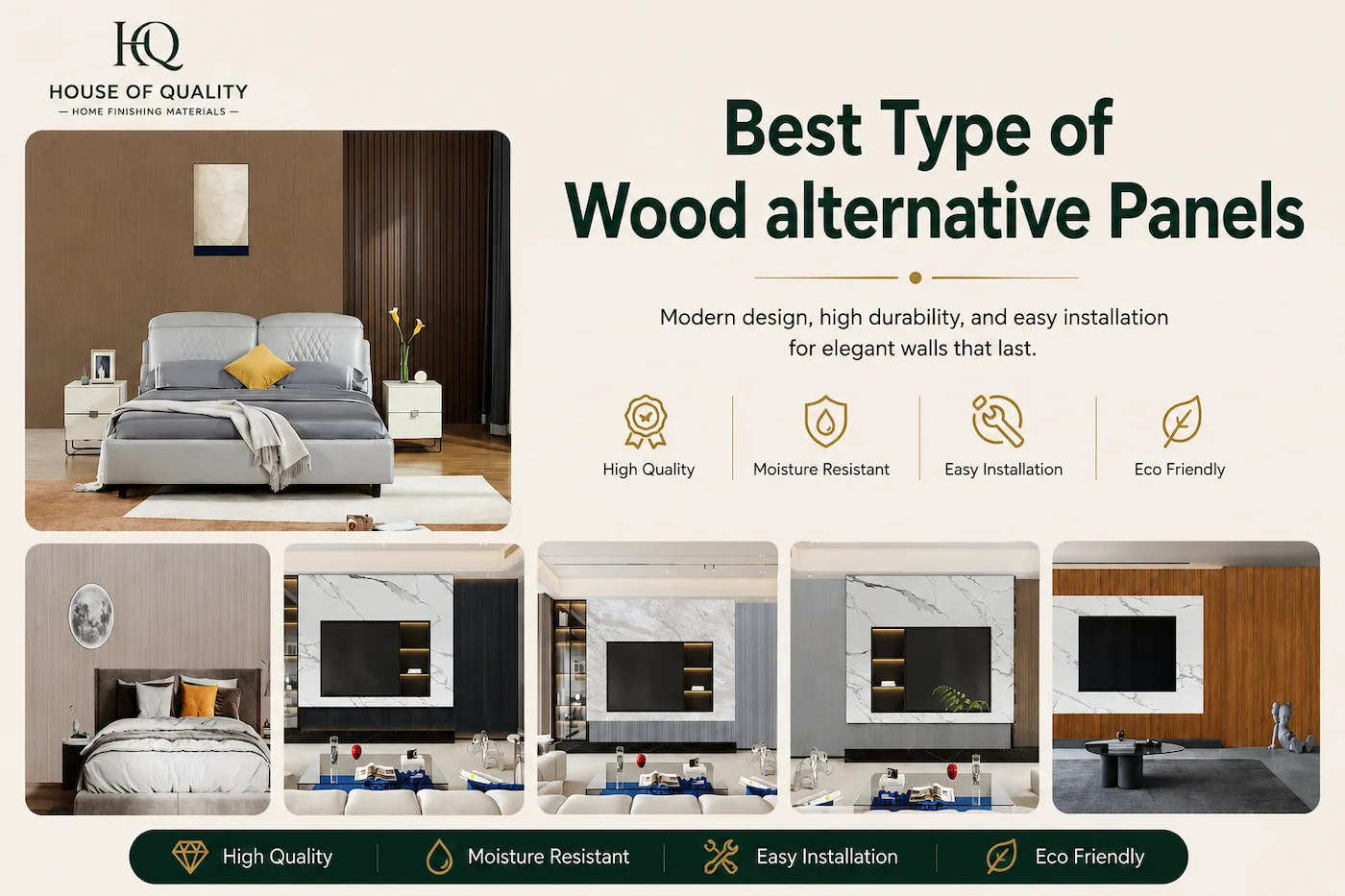
Standing in a showroom with three or four wood-look panel samples in your hands, all of them labeled “premium,” all of them looking almost identical under the lighting — that’s usually where the confusion starts. Picking the best type of Wood alternative panel isn’t really about which sample looks nicest under showroom lights; it’s about matching the panel to the room, the lighting it gets, and how the wall will actually be used day to day.
This guide breaks down the real differences between finishes, where each one performs best, and what you should expect to pay in Saudi Arabia this year, so you can walk into that decision already knowing what fits your space.
What Actually Separates One Wood alternative Panel from Another?
Short answer: the panel’s core material and surface coating, not just its printed wood pattern, are what determine how it performs over time.
Most panels on the market are built from either PVC or WPC composite, then finished with a printed or embossed layer designed to replicate wood grain. Two panels can look nearly identical in a photo and still perform very differently once installed — one might resist scratching and fading, while a cheaper equivalent starts to discolor within a year under direct sunlight or kitchen heat.
If you’re trying to identify the best type of Wood alternative panel for a specific room, ask about the coating thickness and UV resistance before asking about the pattern. Those two specs matter far more for long-term appearance than the exact shade you pick.
Matching Colors to the Room, Not the Trend
Short answer: light tones open up small or dim rooms, dark tones anchor larger spaces, and white finishes work best where the panel needs to blend in rather than stand out.
| Finish | Look | Where It Performs Best |
| Light oak tone | Warm, neutral, brightens a room | Living rooms, home offices, hallways |
| Dark walnut tone | Bold, adds contrast and depth | TV feature walls, entryways, reception desks |
| White / ivory | Clean, minimal, low visual weight | Kitchens, small bedrooms, tight spaces |
A common mistake is picking a dark finish because it looked striking in a supplier catalog, then installing it in a room with limited natural light — the result reads as heavy and cramped rather than premium. Matching the tone to the room’s actual lighting is a bigger factor in how good the finish looks than the finish itself, and if you’re unsure which one fits, the House of Quality team on WhatsApp can walk you through it before you order.
Where Each Type Earns Its Keep
Short answer: the same panel that’s perfect for a feature wall isn’t automatically right for a ceiling or a humid bathroom — location changes which specs matter most.
| Application | What to Prioritize | Recommended Pick |
| TV feature wall | Visual impact, contrast | Wood alternative B412, dark-toned |
| Ceiling installation | Low weight, easy fixing | Wood alternative B410, light-toned |
| Kitchen or bathroom wall | Water resistance above all | Wood alternative B413, white finish |
Ceilings deserve special attention here, since not every wood-look panel is rated for overhead installation, and weight matters more than it does on a wall. If you’re unsure whether a specific finish is ceiling-rated, it’s worth confirming with the supplier before committing to a full room.
Is It Actually Worth Choosing Over Real Wood?
Short answer: for most homes and commercial spaces, yes — the gap in moisture resistance and upkeep tends to outweigh the traditional appeal of solid wood.
| Factor | Wood alternative Panels | Solid Wood |
| Humidity resistance | Strong | Weak to moderate |
| Upfront cost | Lower | Higher |
| Installation time | Same day in most cases | Often multi-day, skilled labor |
| Long-term upkeep | Occasional wiping | Sealing, refinishing, pest control |
Where solid wood still wins is in resale perception for high-end, heritage-style properties — but for everyday homes, offices, and retail fit-outs, the maintenance savings alone usually settle the decision.
What the Best Type of Wood alternative Panel Costs in 2026
Short answer: pricing generally falls between SAR 45 and SAR 75 per square meter, with the finish and design complexity driving most of the variation.
| Panel | Price per m² |
| Light finish (B410) | SAR 45 – 65 |
| Dark finish (B412) | SAR 55 – 75 |
| White finish (B413) | SAR 50 – 70 |
Simple, flat wall coverage sits at the lower end of each range; three-dimensional layouts or rooms with multiple cuts and corners push costs toward the top, so it’s worth sending your exact wall dimensions for an accurate quote rather than estimating from the table alone.
Installing and Living With It Day to Day
Short answer: installation is adhesive- or clip-based and typically finishes within a day, and upkeep afterward is close to zero.
A level wall surface matters more than most people expect — any bump or dip becomes visible once the panel goes up, so a quick surface check before installation saves a redo later. Fixing methods vary by panel type, from strong adhesive to hidden click-fit systems, and a trained installer usually completes an average wall in under a day.
Once it’s up, the routine is simple: wipe it down occasionally, and that’s it. No annual sealing, no pest treatment, no repainting — which is the main reason the running cost stays so low compared to solid wood over a five-year span, and it’s a big part of why the House of Quality Wood alternative collection keeps growing every season.
Frequently Asked Questions
Which finish holds up best in direct sunlight?
Panels with a UV-stable coating resist fading far better than standard printed finishes — worth asking about specifically if the wall gets afternoon sun.
Is there a real difference between cheap and premium Wood alternative panels?
Yes, mainly in coating thickness and scratch resistance. Cheaper panels often look identical on day one but show wear within months in high-traffic areas.
Can one panel type work for both walls and ceilings?
Some can, but not all — ceiling use depends on the panel’s weight rating and fastening system, so it’s best to confirm before ordering for an overhead installation.
How does humidity in coastal cities like Jeddah affect the choice?
Coastal humidity makes moisture-rated finishes a priority over purely aesthetic choices, since not every panel is built with the same water resistance.
Do these panels come with any warranty?
Warranty terms vary by panel line, so it’s worth confirming coverage details directly with the supplier before installation, especially for commercial projects.
Roughly how much less does this cost compared to imported hardwood?
Expect savings in the range of 40% to 60% versus imported natural wood for the same wall area, before even factoring in future maintenance costs.
There’s no single best type of Wood alternative panel for every room — the right pick depends on how much light the space gets, whether it’s exposed to moisture, and whether the wall in question is a focal point or a background surface. Once those three factors are clear, narrowing down the finish becomes a much easier decision than it looks in a showroom, and the House of Quality team on WhatsApp can turn that decision into a same-day quote, or you can browse the full website to see every finish available.