


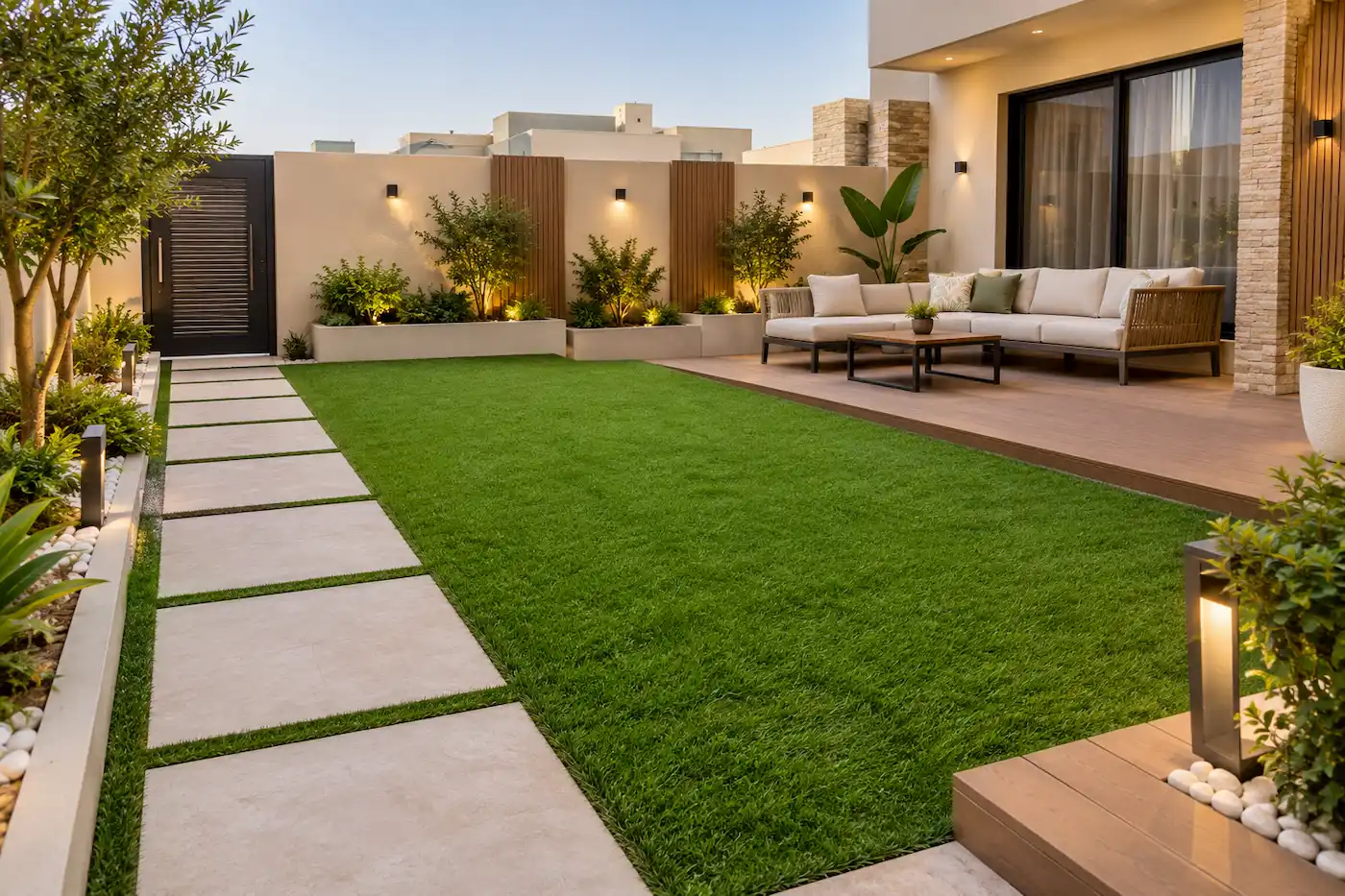
A courtyard can look beautiful immediately after artificial grass is installed, yet a few weeks of daily use may reveal flattened fibres near the entrance, loose edges around the seating area, or worn patches where children play. The solution is not always to choose a different product. Often, it starts with planning how the space will be used.
Choosing artificial grass for courtyard spaces means considering walking routes, seating, play areas, drainage, and the materials that will sit beside the turf. This guide explains how to divide a courtyard into practical zones, compare pile heights, combine artificial grass with gravel and WPC flooring, and prepare the surface before installation.
How Do You Choose Artificial Grass for Courtyard Use?
Consider the amount of foot traffic, the desired appearance, and the product’s specifications. Shorter turf may be practical for frequently used areas, while a fuller pile may suit decorative and light-use spaces. The right choice depends on the product’s density, backing, installation method, and intended use.
Every courtyard has different requirements. Before choosing a colour or pile height, identify where people walk daily, where outdoor furniture will stand, and whether children will use the space.
The following table provides general planning guidance, not a universal technical specification.
| Courtyard use | Suggested pile height | What to check |
| Frequent walking near the entrance | Around 3 cm | Density, fibre resilience, and fixing method |
| Children’s play corner | Around 4 cm | Product suitability, surface preparation, and cushioning requirements |
| Decorative area around seating | Around 4 cm | Appearance, texture, and how furniture will sit |
| Small courtyard with a limited budget | Around 3 cm | Product specifications, installation requirements, and warranty terms |
Pile height is only one part of the decision. Compare the fibre density, backing, drainage requirements, warranty conditions, and suitability for the intended location. A taller pile is not automatically more durable, and a product’s warranty should not be treated as a guarantee of its actual service life.
For example, the store’s 3 cm green artificial grass page lists a 30 mm pile, 16,500 stitches, and a seven-year warranty. Check the current product page for the full specifications and applicable warranty conditions.
Artificial Grass Prices and Product Options
The following products were listed on the store website in the source material dated 26 October 2026. Prices and availability may change, so confirm the current listing and pricing unit before ordering.
| Product | Listed pile height | Listed price (SAR) |
| 3 cm Artificial Grass for Courtyards | 3 cm | 25 |
| Artificial Grass 4 cm with Natural Appearance | 4 cm | 28 |
| 3 cm Green Artificial Grass | 3 cm | 24 |
The store’s published pricing information states that prices include installation and VAT. However, confirm the unit of measurement and the terms for each product before calculating your total project cost.
Browse the artificial grass product category to compare available options. You can also contact House of Quality on WhatsApp to ask about suitable products and installation.
Planning Artificial Grass for Courtyard Spaces: A Three-Zone Layout
Divide the courtyard into walking, seating, and play zones, then choose a suitable surface for each. Artificial grass does not need to cover every square metre.
Start by sketching the courtyard and marking the routes people actually use: from the entrance to the car, from the door to the seating area, and between the kitchen and outdoor space. These routes often experience more pressure than decorative corners.
For main entrances and heavily used walking routes, consider a hard surface such as tiles. Artificial grass may work for areas with lighter foot traffic, provided the product and installation are suitable.
Example 1: A 6 × 5 m Courtyard
The total area is 30 m².
| Zone | Dimensions | Area | Suggested material |
| Path from entrance to seating | 1.2 × 6 m | 7.2 m² | Tiles or properly prepared compacted gravel |
| Outdoor seating area | 3 × 3 m | 9 m² | WPC flooring |
| Remaining courtyard | — | 13.8 m² | 3 cm or 4 cm artificial grass, depending on use |
Example 2: A 10 × 8 m Courtyard
The total area is 80 m², leaving room for a dedicated play corner.
| Zone | Dimensions | Area | Suggested material |
| Main path | 1.5 × 8 m | 12 m² | Tiles |
| Seating platform | 4 × 3 m | 12 m² | WPC flooring |
| Children’s play corner | 4 × 4 m | 16 m² | Suitable 4 cm turf, subject to product specifications |
| Remaining courtyard | — | 40 m² | 3 cm artificial grass, depending on use |
In this example, artificial grass covers 56 m² of the 80 m² courtyard. The tiled path and seating platform protect the areas that need a firmer surface, while the turf provides a green finish elsewhere.
For smaller courtyards, keeping the grass in one continuous section can reduce the number of cuts, joints, and exposed edges. A straight boundary or one broad curve can also make the layout look more organised. Leave enough room around furniture to move chairs comfortably.
To turn your plan into a finished space, explore the store’s supply, installation, and garden landscaping service. You can also review these villa landscaping ideas for larger outdoor areas.
Combining Artificial Grass with Gravel, WPC, and Outdoor Seating
Use each material for a specific purpose. Gravel can form a border, WPC can provide a stable seating platform, and artificial grass can cover the remaining areas. Proper edges and drainage are essential where the materials meet.
| Material | Potential role | What to consider |
| Natural stone gravel | Decorative border or suitable light-use path | Containment, base preparation, and drainage |
| WPC flooring | Stable outdoor seating platform | Level installation and a neat junction with the turf |
| Outdoor seating and shade structures | Comfortable seating area | Shade, airflow, and furniture placement |
Artificial Grass with Gravel
A gravel strip beside a wall can create a visual border and help manage surface water when the base and drainage are designed correctly. Use a suitable edging system to prevent gravel from spreading onto the grass.
Gravel is not a substitute for proper drainage or a correctly prepared base. The installation method should reflect the existing ground, water flow, and intended use.
Artificial Grass with WPC Flooring
WPC flooring can provide a firmer surface for outdoor furniture, tables, and seating. Plan the transition between the deck and turf before installation, and ensure that both surfaces are supported correctly.
Keep the junction neat and stable, and avoid creating a level difference that becomes a trip hazard. Review the available options in the store’s WPC flooring category.
Seating Areas and Shade
If people will sit close to the ground, choose turf based on comfort, product specifications, and how cushions or floor seating will be used. Pile height alone does not establish whether a product is suitable for prolonged sitting.
The guide to outdoor floor seating for gardens provides further ideas. You can also browse privacy screens and shades when planning a more comfortable outdoor area.
Preparing the Base Before Installing Artificial Grass
Measure accurately, prepare a suitable base, provide effective drainage, and decide where each material will end before laying the turf.
1. Measure the Courtyard
Measure the length and width at several points, especially if the courtyard is irregular. Divide the layout into rectangles or other simple shapes, calculate each area, and add the results together.
Subtract areas that will be covered by tiles, WPC, or other materials. Then allow for cutting waste and the layout of the turf rolls. Check the roll width and seam placement before purchasing.
2. Plan the Slope and Drainage
Water should be able to drain away rather than remain trapped beneath the turf. The required preparation depends on whether the existing surface is soil, concrete, or tiles.
A suitable base and drainage arrangement can help reduce standing water, unpleasant odours, and installation problems. If the courtyard is already tiled, read the guide to installing artificial grass on tiles before choosing the installation method.
3. Define the Edges
Plan the boundaries between grass, tiles, gravel, and WPC. Appropriate edging and secure fixing help reduce curling, movement, and visible gaps.
The preparation method should be selected for the actual surface. Installation over soil generally requires more ground preparation than installation over an existing hard surface.
Caring for Artificial Grass After Installation
Remove debris regularly, clean spills promptly, and brush flattened fibres when needed. Artificial grass does not require mowing, but it still needs maintenance.
- Remove leaves and loose debris with a suitable soft brush or blower.
- Rinse the surface when dust accumulates, following the product’s care instructions.
- Clean spills promptly using a method suitable for the turf material.
- Brush flattened fibres gently when necessary, following the manufacturer’s guidance.
- Move lightweight furniture occasionally to avoid concentrating pressure in one area.
- Check edges and seams periodically, especially near entrances and frequently used paths.
The frequency of cleaning depends on foot traffic, dust, pets, weather, and the surrounding landscape. Follow the product manufacturer’s instructions rather than assuming that every turf type can be cleaned in the same way.
Common Mistakes When Choosing Artificial Grass for a Courtyard
- Covering the main entrance route with turf without considering the amount of daily foot traffic.
- Choosing pile height based on appearance alone.
- Dividing a small courtyard into too many separate grass sections.
- Ignoring drainage and the condition of the existing surface.
- Placing visible seams in the middle of a main walking route.
- Ordering based on a product photo without checking the specifications.
- Assuming that the warranty equals the product’s actual service life.
- Forgetting to plan the edges where turf meets tiles, gravel, or WPC.
If you are deciding between two products, send your courtyard measurements and photos to House of Quality on WhatsApp.
Frequently Asked Questions About Artificial Grass for Courtyards
What is the best artificial grass for a courtyard?
The right option depends on how each area will be used, the product’s specifications, and the installation conditions. Compare pile height, density, backing, warranty terms, and suitability for your intended use.
Is artificial grass suitable for a small courtyard?
Yes. A simple, continuous layout can make a small courtyard feel more organised. Check the roll width and plan the seams before installation to help reduce cutting waste.
Can artificial grass be combined with gravel?
Yes. Gravel can create a decorative border or a suitable path when the base, drainage, and edging are planned correctly. The installation should prevent the gravel from spreading onto the turf.
How do I calculate the amount of artificial grass needed?
Divide an irregular courtyard into simple shapes, calculate each area, and add the results. Subtract the areas allocated to tiles, WPC, and other materials, then allow for cutting waste and roll dimensions.
Can artificial grass handle the Saudi climate?
Suitability depends on the product’s specifications and installation conditions. Exposed turf can become hot in direct sunlight. Shade can reduce direct exposure, but it does not guarantee a comfortable surface temperature. Check the product information before using turf in children’s play areas.
How long does artificial grass last?
Actual service life varies with product quality, foot traffic, installation, maintenance, and environmental conditions. A published warranty describes the coverage offered under its terms; it does not necessarily represent the product’s actual lifespan.
Can artificial grass be installed over existing tiles?
It may be possible if the tiles are stable, suitably level, and allow adequate drainage. The surface must be assessed and prepared using an appropriate installation method. Read the store’s guide to installing artificial grass on tiles before proceeding.
How do I maintain artificial grass?
Remove debris regularly, rinse when needed, clean spills promptly, and brush flattened fibres according to the manufacturer’s instructions. Inspect seams and edges periodically.
Conclusion
Planning the courtyard before installation can help you make better use of the space and avoid unnecessary cuts and repairs.
- Map walking routes, seating areas, and play spaces before buying turf.
- Compare pile height alongside density, backing, warranty, and intended use.
- Use tiles or other suitable hard surfaces where a firmer walking route is needed.
- Plan drainage, edging, and seams before installation.
- Maintain the turf regularly and follow the product’s care instructions.
To discuss your project, contact House of Quality on WhatsApp.